


Wait, I Have ADHD?
If you had told me a few years ago that I had ADHD, I probably would’ve laughed. Not because I didn’t believe in ADHD—but because I simply didn’t see how it could apply to me.
I was the quiet kid. The responsible one. I did my homework without being asked, got good grades, and went on to complete two master’s degrees in engineering. I was organised, very focused (sometimes), and hardworking.
But then my child started showing signs of being neurodivergent—emotional intensity, sensory sensitivity, an unusual way of processing the world. I started researching ADHD for her.
And then the penny dropped.
I saw it in one of my parents. Then I started seeing it in myself. The pieces started falling into place, and for the first time in my life, things began to make sense.
Reframing My Childhood
Looking back, I realised how hard it was to concentrate in class. Not because I didn’t care, but because my brain was always elsewhere. To cope, I invented my own learning strategies:
- Turning textbooks into colourful diagrams
- Planning every single hour in my agenda
- Creating structure to stay afloat in the mental noise
And even with all that effort, I thought something was wrong with me. I saw my classmates tuning into lessons with what looked like ease. Meanwhile, I was working twice as hard just to stay present—and still felt like I was falling short.
But no one ever noticed, because my grades were excellent.
The Invisible Struggles
So much of my ADHD lived in silence.
It was hidden in my mind, behind masking and perfectionism.
And it came with a constant undercurrent of anxiety.
Trying to fit in.
Trying to keep up.
Trying to stay emotionally “together” when everything felt so overwhelming inside.
I experienced emotional dysregulation as a kind of inner implosion. When I was anxious, it felt like the end of the world. When I was excited, it was just as intense. My brain never slowed down, never took a breath. Not even when I was asleep.
Even at work, I lived in cycles. Periods of extreme creativity and hyperfocus followed by deep crashes of demotivation and guilt. I thought I was inconsistent. I thought I wasn’t good enough.
Now I know better.
And that knowing? It’s a relief. It’s helped me give myself permission to ride the waves—to harness the high moments and be gentle with myself in the low ones.
ADHD Looks Like This, Too
One of the most recognisable patterns in my life is how I can go from zero to ten with a new idea or interest. When something catches my attention, my brain lights up. I get excited—really excited.
But here’s the thing: sometimes I don’t even get to the starting line.
Sometimes I lose interest before I pick up the first tool.
Sometimes the overwhelm kicks in before the action begins.
Other times, I get discouraged when my initial passion doesn’t lead to immediate mastery—because that’s what my brain craves: momentum, progress, novelty, reward.
And yet… contrary to one of the most common ADHD myths, I do finish things.
I’ve followed through on some huge, meaningful projects both at work and outside of work. I’ve seen ideas through to completion when they align with my deeper interests, and I have the space to do it my way. But it’s not linear, and it’s not predictable. It’s a rhythm—ebb and flow, spark and burnout, commitment and pause.
So no, I’m not flaky or incapable. I just operate differently.
And once I started honouring that difference instead of fighting it, everything got easier to understand—even the parts that still frustrate me.
A Lifetime of Masking
When I finally saw myself clearly, I also saw how deeply I’d been masking for decades.
I shaped myself to meet expectations—quiet, competent, efficient. But I never truly felt fulfilled in my relationships. I often felt like I was holding a part of myself back, never quite being understood, never quite belonging.
I lived with chronic anxiety and didn’t even know it—it was just the air I breathed. And I coped the way many people do: with control, with productivity, and often, with emotional eating, especially when I was struggling to focus or regulate.
I had no idea that ADHD could look like this—because the research didn’t look like me. It didn’t look like women. It didn’t look like quiet, successful, high-functioning people. So, I missed out on support I didn’t know I needed.
It Wasn’t Just About ADHD
And then, another surprise.
I discovered I’m twice exceptional—both gifted and with ADHD.
This brought up a whole new set of contradictions. People expect giftedness to come with ease. And people expect ADHD to come with chaos. But when you’re both, you live in a constant tug-of-war:
- You’re doing too well to be struggling.
- You’re struggling too much to be exceptional.
But here’s what I’ve learned:
ADHD isn’t a flaw—it’s a different way of experiencing and processing the world.
When I’m allowed to learn and work my way, I thrive. But when I’m forced to fit into someone else’s system, I struggle—just like anyone would, if asked to function in a world not designed for them.
I Too Have Superpowers
One of the things I’ve learned on this journey is how uniquely ADHD and neurodivergence can show up from person to person—especially around sensory processing.
For me, that’s one area where I didn’t struggle the way many others do. I’ve always enjoyed high-sensory environments—music concerts (yes, even heavy metal!), packed discos, firework shows. The lights, the sound, the people, the energy—it was exhilarating, not overwhelming.
But what I’ve come to understand is that while I can be in those environments, I usually feel drained afterwards. My nervous system doesn’t always show it in the moment, but I definitely need time alone to reset. Quiet space. A moment to dive back into my thoughts and regulate. It’s like I soak in all the stimulation first—and then need to retreat.
That said, certain sudden noises used to catch me off guard as a child. I remember getting scared and jumpy with sirens and toilet flushes. I’d flush and run—as fast as I could—to escape the sound.
Intensity, in general, has always been a big part of who I am.
Not just in sound, but in everything.
My emotions, my thoughts, my interests—even people.
I can become completely consumed by a person or topic for weeks. It takes over my brain and my heart. Then suddenly, as quickly as it came, the intensity fades, and I’m left with… nothing. Apathy. Disinterest. A blank space.
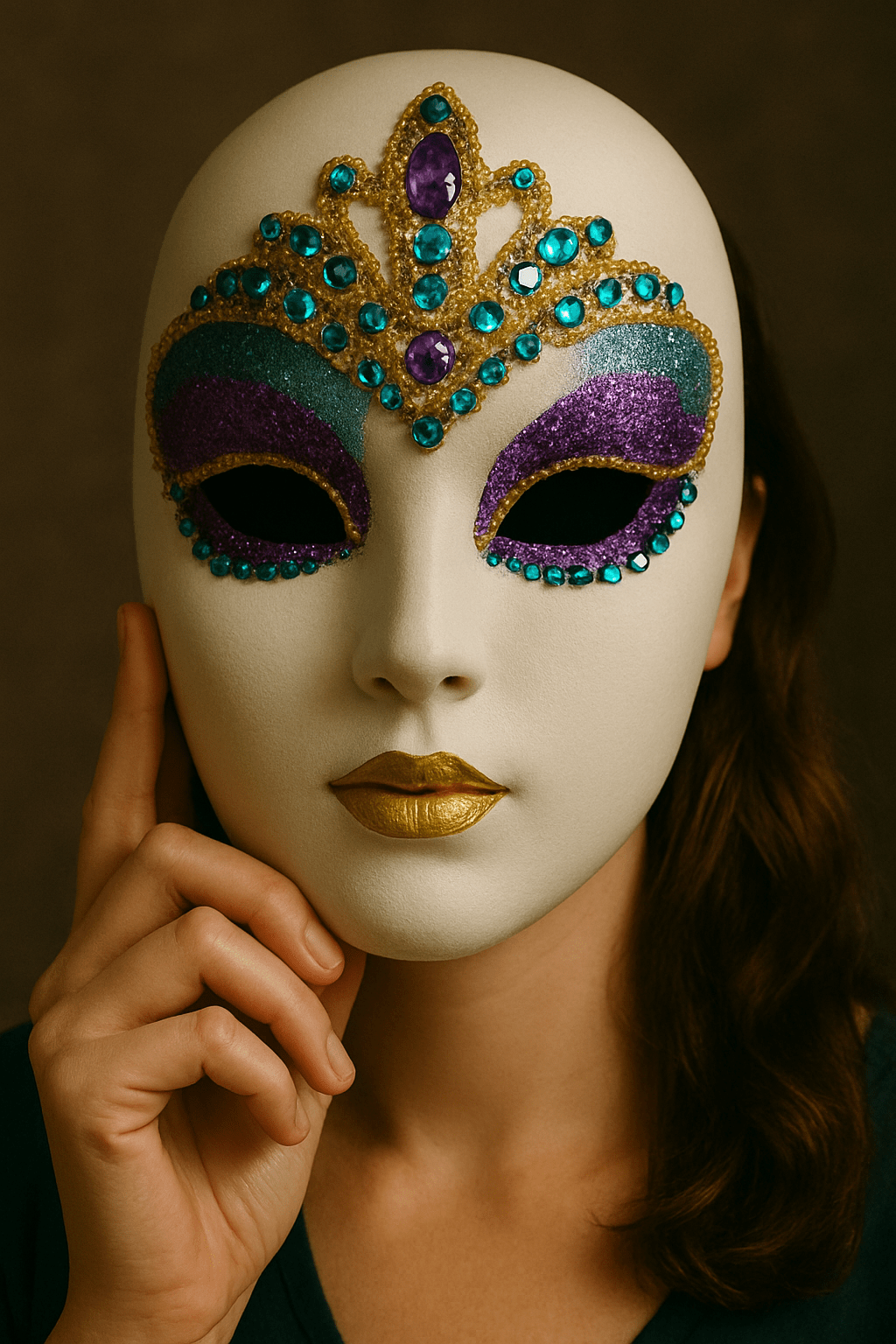
No one ever sees this happening, of course. Because masking is my superpower. I’ve worn the mask for so long that sometimes even I don’t realise I’m wearing it.
A Different Kind of Intelligence
And while ADHD can be exhausting, confusing, and messy—there are parts of it I genuinely love about myself.
- I’m deeply creative. I can make something beautiful out of chaos.
- I’m organised, even in my own neurodivergent way—especially when it comes to big-picture planning.
- I have intense empathy. I read people intuitively—sometimes without even trying, a skill I’ve honed over years of emotional tuning-in.
- I value honesty and loyalty above everything else. I connect with people who are real and emotionally available. Shallow connections don’t hold my attention for long.
Yes, I may burn bright and fast. But in the moments I am connected, interested, inspired—there’s nothing more alive, more driven, more me.
You’re Not Alone in This
There are so many of us walking around with brains that function differently—and beautifully. And yet, for so long, we’ve been told we’re too much, or not enough. We’ve had to shape-shift, camouflage, perform.
But ADHD isn’t just about distraction or disruption.
It’s also about depth, drive, intuition, and creativity.
We need to stop measuring everyone by the same scale—and start honouring how different minds can bring different kinds of brilliance into the world.
So whether you’ve just started wondering about yourself, or you’re years into this discovery, or maybe you’re supporting someone else on their journey—please know:
You’re not broken. You’re not alone.
And this world desperately needs what you bring to it.
🎧 Let’s Keep the Conversation Going
💬 I’d love to hear from you.
Does any part of this story resonate with your experience? Or maybe you’re just beginning to wonder about your own neurodivergence. Drop a comment below—I read every one.
And if you want to hear more voices like mine, I invite you to check out my conversation with José Moraes on the Intersecting Voices podcast. We dive deep into how ADHD shows up uniquely for each of us—and why understanding these differences is so important.
Because the more we talk about this, the less alone any of us have to feel.


 The Intersectional Hub
Leave a comment